
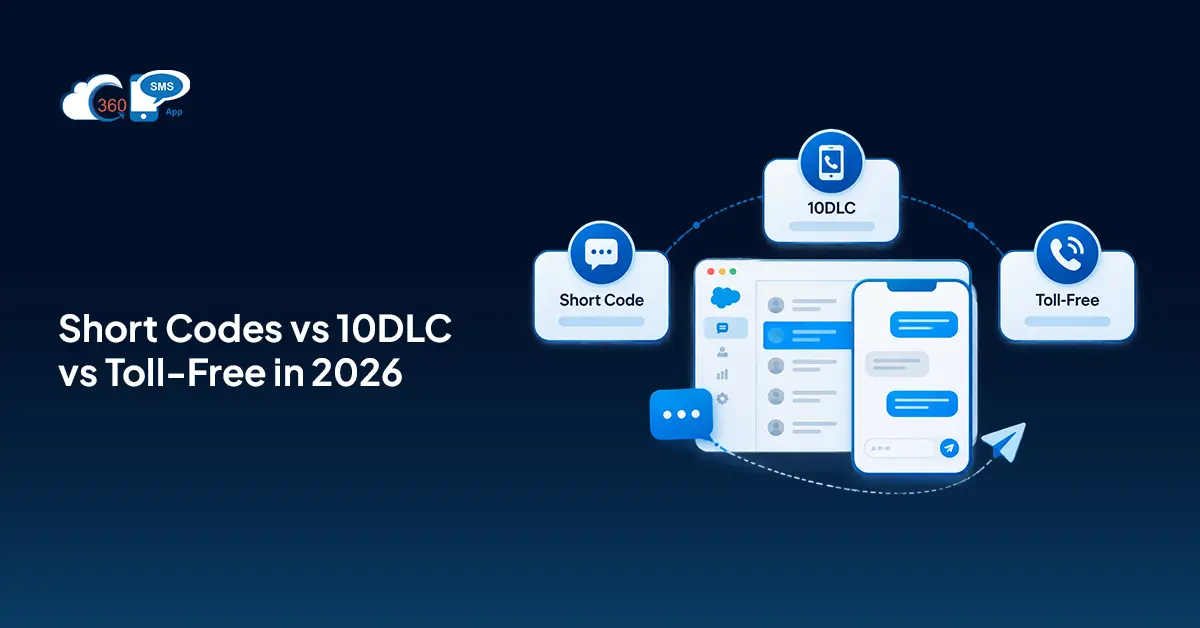

The 3 SMS Number Types, Explained Simply
They look similar on the surface. They behave very differently under load.
Short Codes
Five or six digits. That’s the whole design brief. Short codes were built so that people could remember the number from a TV ad or a billboard and text in without writing anything down. They send up to 200 messages per second. Delivery rates sit around 99.5%. And that performance costs real money — $500 a month to lease a random short code, plus a $650 one-time setup fee. Want a vanity code? $1,000 a month. Approval takes 4 to 12 weeks. No voice calls, ever. For anyone not sending at genuine scale, the numbers don’t justify it.
10DLC
A standard 10-digit local number, registered through The Campaign Registry. Brand registration runs about $4. Campaign registration is around $10. Throughput is moderate. Approval clears in 24 to 48 hours for brand, then 3 to 10 days for the campaign itself. Recipients see a local area code, which helps open rates more than people expect. No per-message delivery receipts — that’s the main trade-off. But for most businesses running Salesforce campaigns? This is the right lane.
Toll-Free
The 1-800 format. Caps at roughly 30 messages per second, which sounds limiting but covers most transactional use cases without breaking a sweat. Delivery receipts available. Low cost. And if your team already takes inbound calls on a toll-free number, sticking with it for SMS keeps one consistent identity for customers rather than confusing them with a separate number.
Head-to-Head: SMS Number Types Comparison
No padding. Here’s the sms number types comparison you actually need.
| Feature | Short Code | 10DLC | Toll-Free |
| Cost | $500–$1,000/mo + setup | ~$4 brand + ~$10 campaign | Low monthly |
| Throughput | Up to 200 MPS | Moderate | ~30 MPS max |
| Approval Time | 4–12 weeks | 3–10 days | 5–15 business days |
| Voice Capable | No | Yes | Yes |
| MMS | Yes | Yes | Yes |
| Delivery Receipts | Yes | No | Yes |
| Best For | High-volume blasts | Personalized marketing + transactional | B2B transactional |
Short Codes: When They’re Worth It
100 messages a second. Think about what that means for a flash sale going to 400,000 people. You’re not waiting around — the whole list gets hit in minutes, not hours. That window matters. A promotion with a 3-hour expiry that takes 4 hours to deliver isn’t a promotion anymore.
Dedicated short code sms makes sense for retail blasts, political campaigns, emergency alerts, and any scenario where throughput and guaranteed delivery are the whole point. Carriers treat short code traffic differently. Less filtering. Less risk of messages landing in some quiet carrier-level purgatory. That’s part of what the lease fee pays for.
But here’s the honest version. Under 50,000 messages a day, you’re probably overpaying for infrastructure you don’t need. Shared short codes used to solve this — a lower-cost entry point to short code speeds. That option’s gone. It’s dedicated or nothing now, which changes the math significantly for smaller senders.

10DLC: What Most Businesses Should Actually Be Using
Most businesses should be on 10DLC. That’s not a hedge — it’s just true.
Low registration cost. Fast approval. A local number that recipients actually recognize. Compatible with both promotional and transactional sends from the same number. The 10DLC registration benefits hold up in practice, not just on paper. For Salesforce teams sending bulk messages from Reports, Campaigns, or List Views, 10DLC gives you the reach without the overhead of short code provisioning or the 12-week wait.
One limitation worth knowing upfront: no per-message delivery receipts. You get aggregate send data, not confirmation per contact. For most outreach workflows this is fine. For anything with tight compliance requirements around individual message tracking, it’s worth factoring in before you commit.
Toll-Free SMS: The Honest Case For It
Toll free sms vs short code at high volume is a straightforward win for short codes. Not a close call. But most B2B teams aren’t sending at short code volumes, which makes that comparison mostly irrelevant.
Appointment reminders. Invoice notifications. Account alerts. Verification codes. Toll-free SMS handles all of it cleanly, with delivery receipts included. Verification is required, but the process is nowhere near as involved as short code approval. And the voice consistency angle matters more than it sounds — customers who call your 1-800 number and then get a text from a completely different number tend to ignore it. One number across channels removes that friction.
The 30 MPS ceiling only hurts when you hit it. Most teams using toll-free for transactional sends never do.
The Salesforce SMS Context: Which Number Type Should You Choose?
So where does this land for Salesforce teams? Practically.
Running personalized outreach to 3,000 leads from a Salesforce Report? 10DLC. Cost-effective, fast to set up, and the local area code gives you a slight edge on open rates without extra effort. Running a flash promotion to 200,000 contacts with a narrow send window? Dedicated short code sms. The throughput difference is real, and the campaign timing depends on it.
360 SMS App supports all three number types natively inside Salesforce. No middleware. No separate platform login. Bulk sends from List Views, Campaigns, and Reports run the same way regardless of which number type sits underneath. AI compliance monitoring and intent-based opt-out detection work across all three — so whichever path you take, those guardrails stay in place.
Spending hours figuring out which SMS number type fits your Salesforce org, only to realize the configuration still needs work before a single message can go out?
Decision Framework
Run through this. It’s short.
- Under 100,000 messages a day: 10DLC, almost certainly.
- Over 100,000 a day, or running timed marketing blasts where delivery speed is the campaign: dedicated short code.
- B2B transactional, or your team already has a toll-free voice number customers recognize: toll-free SMS.
The best sms number for business 2026 is the one matched to your volume and use case. Not the flashiest option on the spec sheet.
Final Thoughts
The short code vs 10DLC 2026 question used to have a messier answer. Shared short codes gave smaller senders a middle path. Shared short codes discontinued across US carriers and that path closed. Now it’s three options: dedicated short code sms at full cost for genuine scale, 10DLC at low cost for most everything else, toll-free where transactional and voice consistency matter. For most Salesforce businesses in 2026, 10DLC is the answer. Short codes are worth the price tag at the right volume — and the sms number types comparison table above makes it clear where that threshold sits.
Not sure which number type actually fits your Salesforce messaging setup? Our team helps businesses configure 10DLC, short codes, and toll-free SMS natively inside Salesforce, without the guesswork. Contact our experts.