

— Marc Benioff, Chair and CEO, Salesforce

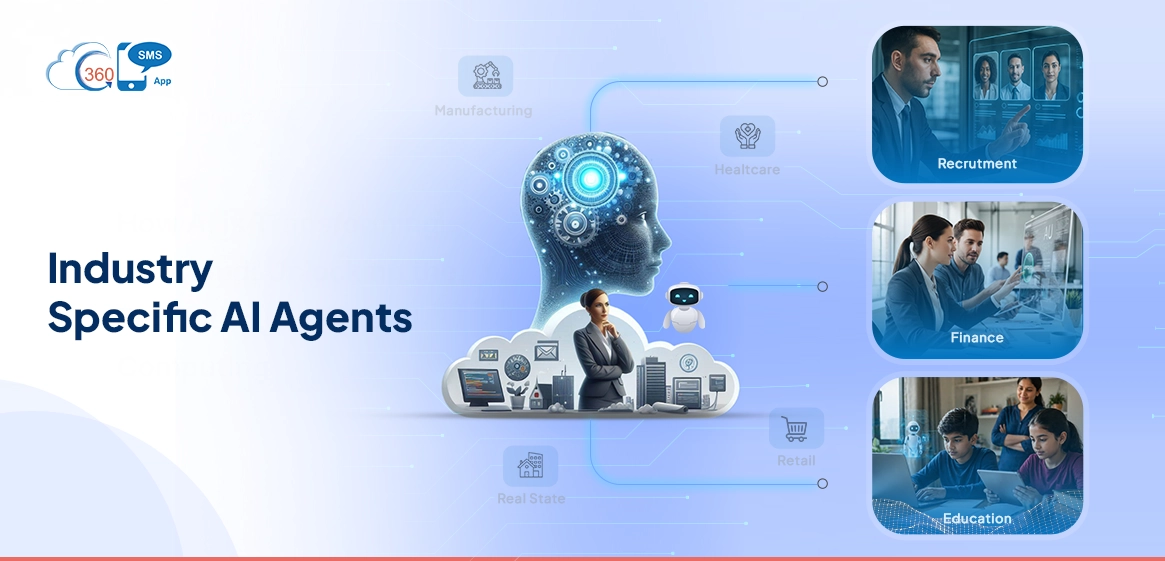
For a while, enterprise AI has been framed too broadly: AI for healthcare, AI for education, AI for financial services. But Salesforce is signaling something more practical with Agentforce. The real shift is not just toward industry AI. It is toward packaged AI agents built for impact-driven workflows, specific business roles, and measurable operational outcomes.
That is what makes this moment more important than another round of smart demos.
In Salesforce’s own product direction, agents are moving closer to operational software: built to reduce routine work, improve response speed, expand capacity, and support teams inside real business processes. And the future-facing view Salesforce is now painting goes even further, toward multi-agent collaboration, orchestrator agents, multimodal inputs, and longer-term memory that make agents more useful inside complex workflows.
What “Packaged AI Agents” Actually Means
Enterprise AI has already gone through two familiar stages.
- First came experimentation: proofs of concept, pilots, and isolated demos that showed large language models could do surprising things in controlled conditions.
- Second came integration: vendors embedded AI into search, assistance, summaries, and copilots inside existing products.
The packaged AI agent phase is different. It is more operational, more structured, and more deployable.

At its core, a packaged AI agent has three defining characteristics:
- Pre-built for a role, not just a category.
A banking service agent is not “AI for banking” in the abstract. It is built around the actual work of a service rep, with the relevant actions, context, and policies already shaped for that role.
- Embedded in workflows, not bolted on beside them.
These agents sit inside the platforms teams already use, such as Health Cloud, Education Cloud, and Financial Services Cloud, instead of forcing organizations into a separate AI operating environment.
- Governed by design, not after deployment.
Salesforce is explicitly positioning these agents with admin controls, policy-aware behavior, and the kind of visibility and control that enterprises need before they scale AI in production.
Gartner’s June 2025 warning that more than 40% of agentic AI projects could be canceled by the end of 2027 because of rising costs, unclear value, or weak risk controls makes the case for specificity even stronger. The closer an agent is to a real workflow, the easier it is to justify, measure, and govern.
| Traditional AI Framing | Packaged AI Agent Framing |
| AI for a broad industry | AI for a specific workflow or role |
| Demo-led value | Operational value |
| General assistance | Purpose-built execution support |
| Add-on intelligence | Workflow-native intelligence |
| Governance added later | Governance built into the operating model |
Why Salesforce Is Packaging AI Around Real Work Now
The Three forces have converged to make this the right moment for Salesforce’s vertical AI agent strategy.
1. The Data Infrastructure is Finally Ready
Salesforce spent years building industry-specific data models and cloud products long before this moment. That groundwork matters now because AI agents are only as useful as the data structures and actions they can access. In healthcare, education, and financial services, Salesforce is not starting from raw prompts. It is building on top of systems that already reflect industry-specific entities, relationships, and workflows.
2. Enterprise Buyers are Tired of Configuration-Heavy AI
One of the quiet frustrations in enterprise AI over the last two years has been the gap between what a model can do in a demo and what a company can get it to do reliably in production. Packaged agents narrow that gap. They give buyers a faster route to experimentation and, more importantly, the confidence.
3. Workforce Pressure is Turning AI into an Operations Question
The industries Salesforce is emphasizing all face workforce strain in one form or another.
- Healthcare teams are overloaded with administrative work.
- Universities are trying to deliver more personalized support with limited advising capacity.
- Financial institutions are balancing shrinking workforces with rising expectations for responsiveness and personalization.
These are not theoretical use cases. They are workflow bottlenecks.
That is why Salesforce’s own future-of-agents narrative matters here. The company is not only describing what agents can do today. It is describing where they are headed: systems of agents, orchestrated workflows, multimodal understanding, and longer-term memory. In business terms, that means the category is evolving toward more connected execution, not just better chat.
| Industry | Primary agent role | Core workflow solved | Business impact |
| Healthcare | Patient access and service agent | Eligibility, benefits, intake, case routing, disease response | Faster access, lower admin load, better operational throughput |
| Education | Admissions and student success agent | 24/7 inquiry handling, advising summaries, next steps, advancement insight | Higher enrollment responsiveness, stronger retention support |
| Financial Services | Advisor and service agent | Meeting prep, follow-up, collections, routine service | More client face-time, faster resolution, better productivity |
| Recruitment | Autonomous hiring agent | Sourcing, screening, outreach, interview scheduling | Faster time-to-hire, lower manual recruiting effort |
Healthcare: AI Agents Becoming Workflow Products
Healthcare is one of the hardest environments in which to deploy AI well.
- Compliance is strict.
- Data sensitivity is extreme.
- Workflows are fragmented across systems, teams, and care contexts.
That is exactly why Salesforce’s push here matters. Agentforce for Healthcare is positioned as a way to bring humans and agents together on a trusted, unified platform to boost productivity, contain costs, and accelerate measurable outcomes. It is explicitly grounded in deep industry data and designed for payers, providers, and public health organizations.
1. Patient Support Is Becoming an AI Workflow
The first win is patient service. Salesforce’s healthcare positioning centers on intelligent agents that can support patient-facing and administrative work where volume is high and rules are clear.
The healthcare page also points to concrete use cases like home care service recommendations and quote creation based on coverage details, which is a strong sign that the model is being shaped around actions, not just answers.
2. Care Coordination Is Becoming More Agent-Led
Salesforce highlights healthcare-specific roles, deep industry data, and healthcare workflows as the building blocks of Agentforce for Healthcare. That suggests the platform is being positioned to support connected operational processes, not just front-door inquiry handling.
The disease surveillance use case makes that especially clear: Salesforce says Agentforce can leverage pre-built disease definitions, transform lab reports into cases, and classify incoming cases as confirmed, suspected, or probable. That is workflow software logic.
3. Specialized Health Use Cases Make the Product Story Stronger
Disease response, patient approvals, coverage-based quotes, and service recommendations are easier to operationalize than broad “AI in healthcare” claims. They also make the ROI conversation easier because the workflow is already visible.

Education: AI Agents Across the Full Student Lifecycle
Agentforce for Education is positioned as an agentic AI solution with pre-built skills that serve the learner lifecycle from prospect to alum.
Salesforce highlights recruitment, admissions, student success, and advancement as the core workflow areas, with recruiter, advisor, and advancement roles at the center. It also points to Unity Environmental University as a proof point, saying Agentforce will help it grow enrollment 4x.
1. Admissions Agents Are Moving Students Forward
Admissions is a classic workflow problem: large inquiry volumes, unpredictable timing, and a need for fast, relevant responses. Salesforce explicitly frames Agentforce for ‘AI for Education’ – resolving prospective student inquiries 24/7, surfacing relevant information from knowledge articles and institutional data, and delivering immediate personalized guidance while reducing staff workload.
2. Student Success Agents Support Advising and Follow-up
Salesforce says Agentforce can streamline advising with comprehensive student summaries, campus-policy-based insights, best-fit resource recommendations, and automated next steps like task or case creation. AI for Education is helping institutions move advising from reactive service to more proactive intervention support.
3. Advancement Extends AI Beyond Enrollment
The advancement piece is strategically important because it shows the same Enterprise AI data solutions supporting alumni and donor engagement, not just enrollment operations. Salesforce highlights intelligent prospect profiling and conversational access to data across disparate internal sources. That makes the platform look more like lifecycle software than an admissions tool with AI features.
Financial Services: Role-based AI That Changes the Math
Agentforce for Financial Services is positioned as AI agents with deep industry expertise that automate tasks, optimize processes, and deliver better customer experiences across banking, insurance, and wealth and asset management.
Salesforce says the solution provides proactive 24/7 support and is grounded in deep industry data contextualized for financial-services firms.
1. Advisor Agents Handle the Work Around the Relationship
One of the clearest use cases on the page is meeting preparation and follow-up. Salesforce says Agentforce automates prep so financial advisors have a 360-degree client view, can build stronger relationships, and streamline post-meeting tasks.
Prudential’s Bob Bastian sharpens that value proposition: automate back-end work so employees can focus on keeping customer promises and driving profitable growth. That is not generic AI. That is role-based productivity software.
2. Service Agents Absorb High-volume Process Work
Salesforce also highlights collections assistance and 24/7 service support. Its collections example is especially guiding human agents through routine recovery processes so they can spend more time on complex interactions. It is taking structured work off the human queue.
3. Compliance and Control Make the Category Deployable
The financial-services page repeatedly emphasizes industry-specific roles, deep industry data, prebuilt and custom actions, integration with core systems, no-code setup, and familiar admin controls. That combination is what makes the category more mature. In financial services, usefulness without governance is not enough. Salesforce is trying to make governance part of the buying story, not a post-purchase project.
Recruitment: Vertical Agents Are Compressing Hiring Workflows
Recruitment is repetitive, time-sensitive, and operationally fragmented – thus a perfect use-case for AI. Mira, from 360 Degree Cloud, is positioned not as a general HR assistant but as an autonomous recruiting agent built to run the early hiring workflow end-to-end, from role understanding and structured job briefs to sourcing, candidate engagement, and interview scheduling.
Instead of asking recruiters to manage sourcing, outreach, follow-up, and scheduling across disconnected tools, the agent handles the top-of-funnel coordination so teams can focus on evaluation and closing.
Mira AI brings that model into sharp focus. Its value lies in turning early-stage hiring into a faster, more systemized workflow by reducing manual recruiting effort, accelerating candidate engagement, and helping teams move from open role to qualified conversation with far less friction.
Why Mira fits the packaged-agent model
- It is built around a named workflow, not a vague “AI for HR” idea.
- It is designed to embed into existing recruiting infrastructure.
- It makes value legible through speed, throughput, and lower manual coordination.
- It mirrors the same role-to-workflow packaging logic Salesforce is now using in larger enterprise categories.
This Agent Model Is Spreading Beyond the First Three Verticals
Salesforce is already applying the same packaging logic beyond healthcare, education, and financial services. Agentforce for HR Service brings AI agents into employee support workflows through Slack and the Employee Portal, helping employees handle tasks like PTO requests, profile updates, direct deposit changes, expense submissions, and case tracking.
Salesforce says the agent is grounded in company data, policies, and knowledge articles, and that its own HR team uses it to manage nearly 10 million searches while resolving 96% of employee inquiries without HR intervention.
That shows this is not just a vertical-cloud strategy. It is a broader move to package AI around repetitive, policy-heavy workflows where faster self-service and lower team load create clear business value. Similar vertical specialization can be seen in enterprise software for cattle, which connects livestock operations with finance, inventory, procurement, sales, and reporting.
What CXOs and Industry Leaders Should Do Next
For CIOs, COOs, and decision makers, the real question is not whether AI agents matter. It is where to deploy them first so they improve workflow speed, team capacity, and business performance without creating unnecessary complexity.
1. Reframe Build vs Buy Around Time-to-production
The question is no longer just capability. It is whether a packaged agent from an AI agent development company gets you into production faster than building from scratch. That was one of the sharpest strategic points in your latest version, and it still holds.
2. Treat Specificity as the New Moat
The right evaluation question is not “How advanced is the model?” It is “How well does this agent fit a real workflow, real role, real data model, and real control environment?”
3. Frame Digital Labor as a Workforce Strategy
Healthcare, financial services, education, and HR all face structural workload constraints. The strongest AI case is not replacing people. It is reallocating human time away from repetitive, lower-value work.
4. Make Governance a First-order Buying Criterion
If governance is not built into the product and operating model, it will slow deployment later. Financial services and HR make this point especially clearly.
5. Use the Integration Test as a Filter
Agents that require process disruption rarely scale. Agents that fit the tools, data, and systems people already use have a much better path to adoption.
Conclusion: The Window is Open
The first era of enterprise AI was about possibility. The second was about integration. This next phase is about deployment.
That is what makes Salesforce’s Agentforce strategy important. It reflects a market shift toward AI agents that are easier to apply inside real business environments because they are shaped around specific workflows, roles, and operating needs.
As this model matures, adoption is likely to move faster across industries such as healthcare, education, financial services, recruitment, and HR. The organizations that pull ahead will not be the ones with the most ambitious AI ideas. They will be the ones that identify the right workflows early, deploy with focus, and build confidence through real operational results.